
Chiropractic Adjustments at Align Health Co
Effective for the right presentation. Not applied for everyone. Spinal adjustments are one of the tools available at Align Health Co. For many presentations, it's the most direct route to relief. For others, dry needling or soft tissue work is more appropriate. The decision is based on your assessment, and it's yours to make.
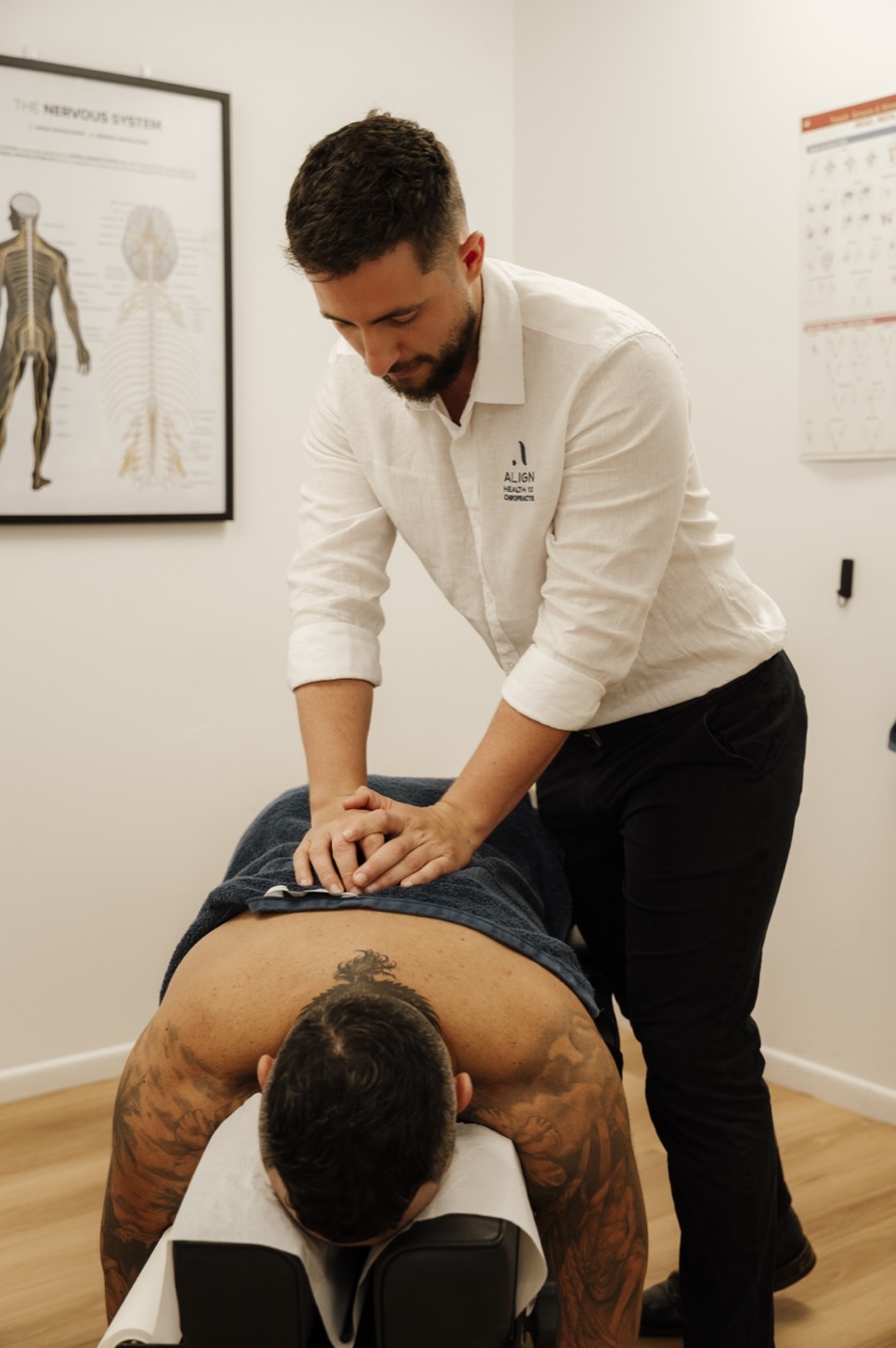
What Actually Happens
A chiropractic adjustment is a controlled, specific movement applied to a joint that is restricted or not moving correctly. The practitioner positions the joint and applies a precise, short thrust to improve movement.
The sound — the crack or pop — is gas entering the synovial joint from outside the space.
Clinically, adjustments restore joint mobility, reduce stiffness in restricted segments, and have a neurological effect on the surrounding muscles and pain receptors. Many patients experience immediate relief after an adjustment. Others feel significant improvement within 24 hours. Uncommon, some patients can have some temporary soreness from something that hasn't been moving in a long time.
Do You Have to Be Adjusted?
Spinal adjustment is one treatment tool. It's not the default, it's not applied to everyone, and it's not something you'll be pressured into.
If you come in with a strong preference against being adjusted, that's completely fine. Dry needling, soft tissue work, and/or exercise rehabilitation can all serve as the primary treatment approach. If adjustment is recommended and you're uncertain, we'll explain why and let you decide.
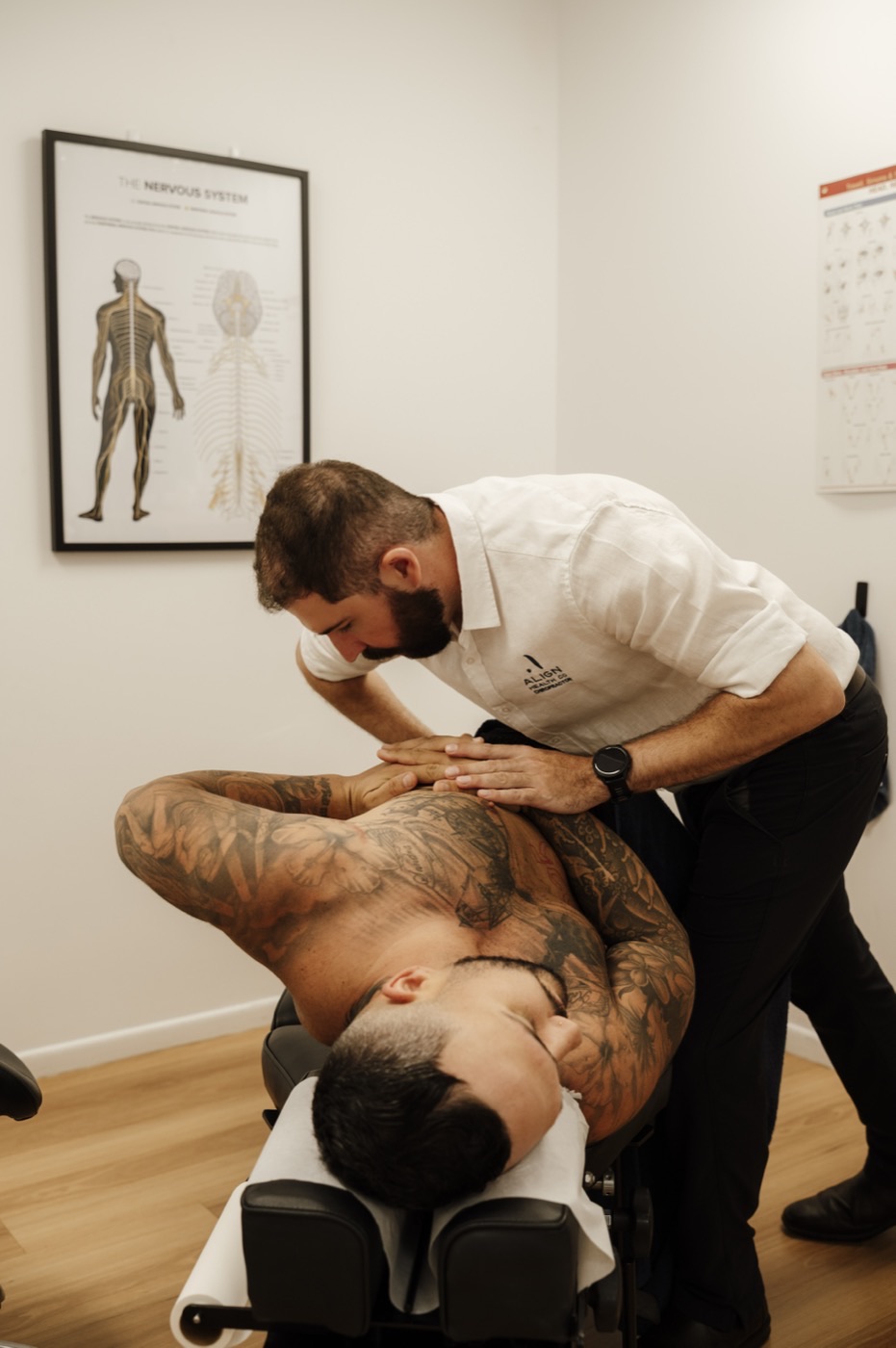
When Adjustment Is the Right Tool
Spinal adjustment is particularly effective for joint restrictions — segments of the spine or pelvis that have lost normal mobility and are contributing to pain, stiffness, or referred symptoms. Common presentations where adjustment forms part of the care plan include:
- Restricted thoracic segments causing upper back pain
- Lumbar restrictions contributing to lower back stiffness
- Cervical (neck) restrictions producing local pain or referred headache patterns
- Sacroiliac joint dysfunction, presenting as hip or glute pain
The decision to include adjustment in a care plan is based on what your assessment shows. If the primary driver of your problem is muscle-based rather than joint-based, dry needling or soft tissue work is likely more appropriate as the lead treatment.
The Experience
The practitioner will position you on the treatment table — lying face down, on your side, or seated depending on the area being treated. A specific hand contact is placed over the target segment, and a quick, controlled movement is applied.
Some patients feel immediate relief and usually a 'crack' — less stiffness, better range of motion, reduced pain. Others feel nothing immediately and notice improvement over the following 24 hours. Mild soreness in the treated area the day after is normal and temporary.
Common Questions About Adjustments
Is a chiropractic adjustment painful?
For most patients, no. The procedure itself is fast and the impulse is controlled. Some soreness in the area can develop in the 24 hours following, particularly after the first adjustment, which is normal.
What does the cracking sound mean?
An effective release has been performed. Yes, adjustments can be effective if there is no crack sound, however it is the best indication that the joint is moving better. The sound is nitrogen gas rushing into the joint space that has a slight separation. The benefit of this is more space in the joint after the adjustment.
How often will I need adjustments?
This depends entirely on your presentation and your care plan. Some patients require a concentrated course over several weeks. Others benefit from occasional maintenance. Your practitioner will give you a specific recommendation at your second appointment, the Report of Findings, once your assessment, first treatment response, and any further investigation have been reviewed.
Are adjustments safe?
Yes. Chiropractic adjustment is a well-established, low-risk treatment when performed by a registered practitioner. All chiropractors at Align Health Co are AHPRA registered. Any risks specific to your presentation will be discussed before treatment begins.
Other Treatment Approaches at Align Health Co
Find Out What's Right for Your Presentation
At your initial consultation, your practitioner will assess your specific problem, explain what appears to be happening, and start care where appropriate. Your written working diagnosis and structured plan are covered at your second appointment, called the Report of Findings. You're in control of what happens.