
Dry Needling for Shoulder Pain: Bursitis, the Rotator Cuff and Rehabilitation
A sore shoulder can make long shifts, desk work and carrying the kids difficult. Here is how we approach shoulder bursitis at Align Health Co, and where dry needling, rotator cuff treatment and specific rehabilitation fit in.
Reaching into the back seat, pulling a shirt over your head or settling into bed can become surprisingly uncomfortable when your shoulder has been sore for a while. Sometimes there was an obvious injury. Often, the ache has built up gradually through long shifts, computer work or the daily demands of looking after children.
At Align Health Co in Mackay, we see a range of shoulder complaints. Subacromial bursitis is one of the most common presentations we assess. For some patients, dry needling of the rotator cuff muscles, particularly the infraspinatus, can be a useful part of care. We combine it with specific rehabilitation and, where appropriate, treatment of the neck and upper back.
What Is Subacromial Bursitis?
A bursa is a small, fluid-filled sac that helps tissues glide over one another. The subacromial bursa sits beneath the bony roof of the shoulder, close to the rotator cuff tendons. When it becomes irritated, lifting the arm or lying on that side can hurt.
You may also hear the terms shoulder impingement, subacromial pain or rotator cuff related shoulder pain. These describe overlapping problems, rather than a simple chain where bursitis always causes impingement. Pain can involve the bursa, the tendons and how the shoulder tolerates load. An assessment helps work out which factors matter in your case.
Why We See It in Desk Workers, Machinery Operators and Parents
Many of the people we see spend hours with their arms held in front of them. That might mean using a keyboard, operating machinery at the mines, breastfeeding or carrying a young child. The shoulder can stay in a similar position for a long time, with few opportunities to change the load.
A forward shoulder position may be part of that picture, but it does not automatically mean something is damaged or pinched. There is no single perfect posture. We look at how long you stay in one position, repeated lifting, recent changes in activity and the strength available to manage those demands.
The practical changes are often small: bringing the mouse closer, supporting the arms during a feed, changing carrying sides or taking movement breaks when the job allows. The aim is to give the shoulder more variety without asking you to hold yourself rigidly upright all day.
Where the Infraspinatus Fits In
The rotator cuff is a group of four muscles that helps control and support the shoulder as the arm moves. The infraspinatus sits at the back of the shoulder blade and helps turn the arm outwards. It is one of the muscles we assess when a patient has persistent shoulder pain.
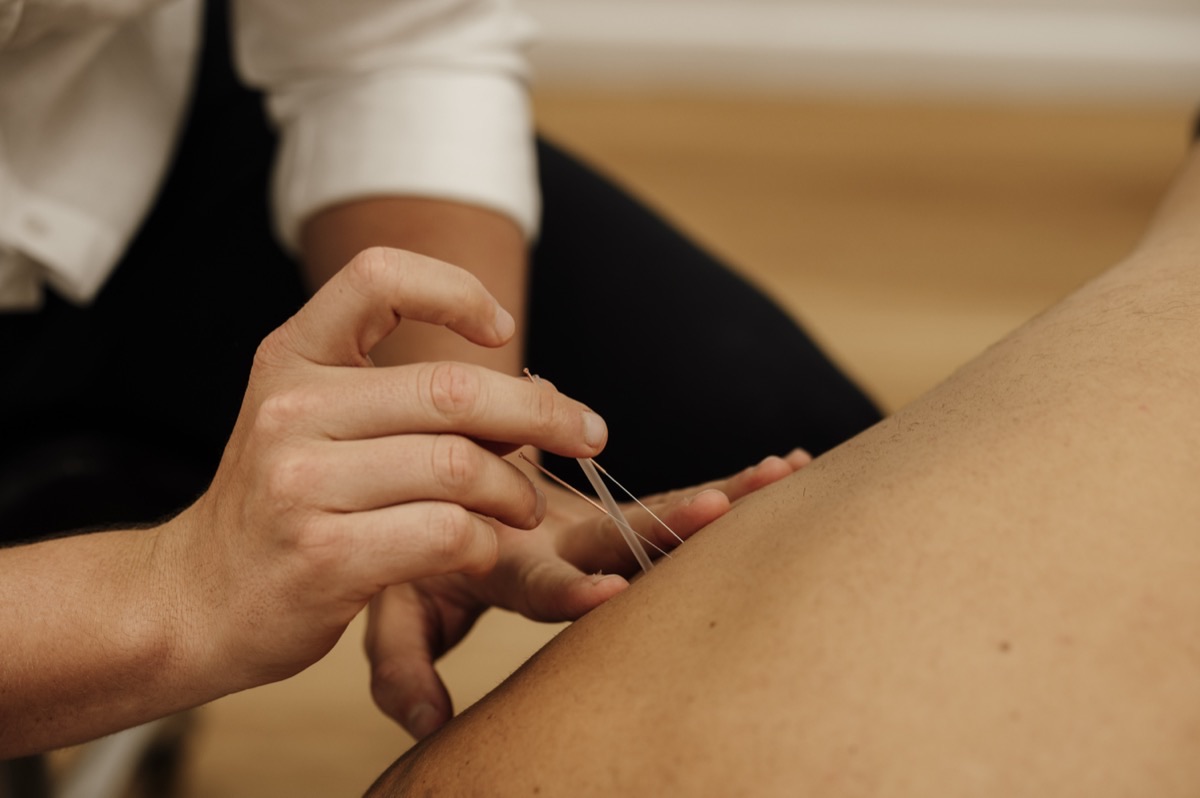
If this area is tender and contributing to the symptoms, we may include dry needling in the treatment plan. A trained practitioner uses fine, sterile needles to target muscle tissue. No medication is injected, and this treatment is directed at the muscle rather than injecting or draining the bursa.
In our clinical experience, some patients find the shoulder feels less guarded and easier to move afterwards. That can make it easier to begin the exercises needed for recovery. It does not establish that the bursa has become less inflamed or that the space inside the joint has increased.
Building Strength Around the Shoulder Blade
For us, needling is one part of a broader plan. Exercise rehabilitation works on the strength and control needed to cope with your normal day.
Depending on your assessment, this may include rotator cuff strengthening, shoulder blade control and exercises for the rhomboids and middle back. Rows, controlled outward rotation and gradually progressed reaching movements are examples of the types of exercise we may use. The starting load and range should suit your symptoms and current capacity.
Someone returning to overhead work needs a different progression from a parent who wants to carry their child comfortably. We build towards those tasks and check how the shoulder responds between appointments. The goal is useful, lasting capacity rather than simply feeling looser on the treatment table.
Looking at the Neck and Upper Back Too
A shoulder assessment also includes the cervical spine, meaning the neck, and the thoracic spine, meaning the upper and middle back. Symptoms from the neck can sometimes overlap with shoulder pain, and movement in these areas may influence how comfortably you use your arm.
Where the findings support it, we may offer manual therapy or chiropractic techniques alongside the shoulder work. Adjustments are an option to discuss, not a requirement for every shoulder complaint or a proven way to resolve bursitis. We explain the proposed approach, alternatives and relevant risks before treatment.
What to Expect at Your Appointment
We start with the history of your pain, the movements that aggravate it and the activities you want to return to. We assess movement and strength before deciding whether dry needling is appropriate. Let us know about medications, bleeding problems, pregnancy and previous reactions to needles.
In the treatment room, your appointment may include hands-on soft tissue work, dry needling of the relevant shoulder muscles, and chiropractic adjustments where appropriate. We choose the combination based on your assessment and what you are comfortable with. We may also guide you through shoulder blade and rotator cuff exercises so you know what to practise at home. Your first visit includes treatment where appropriate, with your individual response helping guide the plan discussed at your follow-up appointment.
A Plan for Persistent Shoulder Pain
We have seen patients with longstanding shoulder pain improve with a combination of muscle treatment, specific rehabilitation and appropriate neck or upper back care. Those clinical observations do not guarantee the same outcome for everyone. Progress depends on the diagnosis, your circumstances and how your shoulder responds.
If your shoulder has been affecting work, sleep or time with your family, an assessment can help clarify the next step. Read our guide to dry needling for more about the appointment, or book with our Mackay team to discuss your shoulder.
Find Align Health Co at Shop 4, 6 Discovery Lane, Mount Pleasant, Mackay. Book an initial assessment online or call 07 4829 4364.
Further Reading
Is Chiro Right for You?
Book a complimentary call and talk it through before you commit. It is a short, no-pressure conversation to help you work out whether chiropractic is the right fit for what's going on.